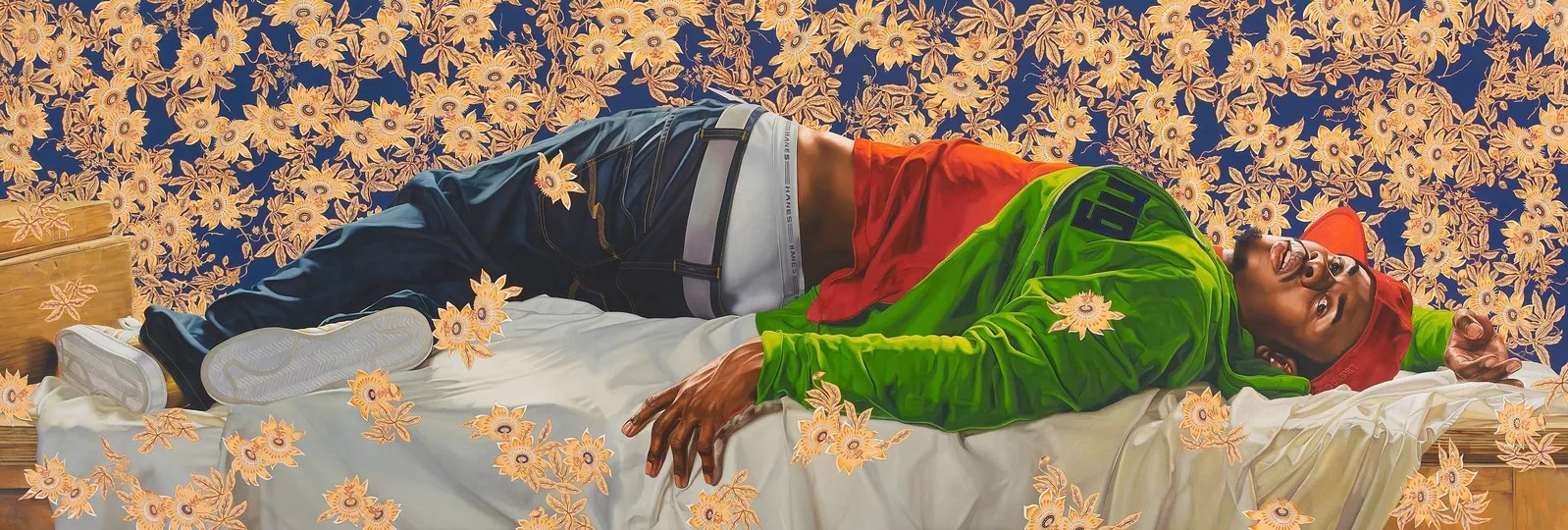
Kehinde Wiley (American, b. 1977). Femme piquée par un serpent, 2008. Oil on canvas, Courtesy of Sean Kelly.
Kehinde Wiley’s steady rise to fame was accelerated upon his commission to do Barack Obama’s Presidential portrait. Drawing stylistic inspiration from the Old Masters, his style is a hybrid of Urban, French Rococo and Western African art. He is known for depicting young African-American men in typically feminine classical poses. (KAZoART Blog)
How are race, gender, and other categories of identity constituted? What is the relationship between social construction and subjectivity? How are systems of inequity structured? This seminar uses the theory of intersectionality as a framework for exploring both institutional and individual relationships between oppression and privilege.
SYLLABUS
This syllabus contains an overview of your academic year.
CANVAS
To access our school’s site, please click to the left.
SEMESTER SCHEDULE
Check Canvas for updates to our schedule.
AROUND THE WORLD
Explore global perspectives on race, gender, and identity.
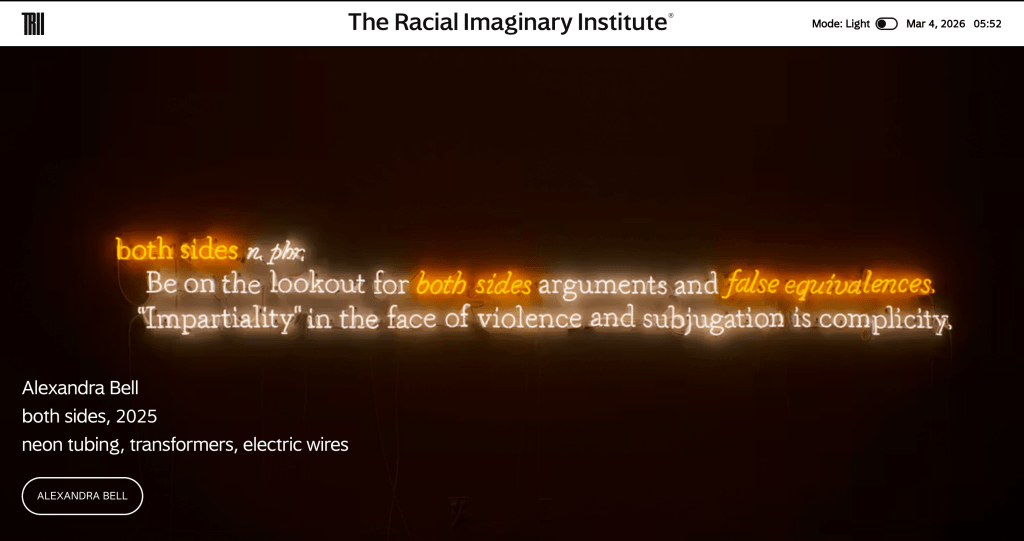
The Racial Imaginary Institute
Co-founded by Claudia Rankine in 2016, The Racial Imaginary Institute (TRII) describes itself as “An Interdisciplinary Cultural Laboratory.” Below, you’ll find a quick link to the site, which we will explore at length this year. Let’s learn to read between the lines.
As you explore, ask yourself these critical questions:
What’s the role of the artist? Does the site suggest that artists have a unique responsibility in dismantling racism that politicians or scientists do not?
What’s your experience as a reader? As you scroll, where do you feel tension in your body? Is there a specific image or phrase that makes you feel defensive, enlightened, or exhausted?
Think about audience. Who does this website seem to be “talking” to? Does it feel like a space for BIPOC (Black, Indigenous, and People of Color) healing, or a space for white self-reflection—or both?
How does TRII use the internet as a “site of protest”? Is a website an effective tool for social change, or is it limited by its digital nature?
If our “imaginary” (how we think) is what sustains systemic racism, can we change the laws without first changing the imaginary?
Welcome to Ms. Conti’s Literature Lab! This site serves both my tutoring clients and my current students. Take a look around, learn something new, and reach out if you need help reaching your educational or personal goals.





 Ms. Conti's Literature Lab